

If your gastroenterologist has recommended an endoscopic ultrasound (EUS), it’s natural to have questions, especially if you’ve never heard of the procedure before. Although the name may sound intimidating, an EUS is a minimally invasive procedure that provides highly detailed images of the digestive tract and nearby organs, helping your care team diagnose and evaluate a wide range of gastrointestinal conditions.
By combining endoscopy with ultrasound technology, an EUS allows your provider to see structures that may not be visible with other imaging tests. It plays an important role in diagnosing digestive diseases, staging certain cancers, and obtaining tissue samples to help guide treatment decisions.
What Is an Endoscopic Ultrasound (EUS)?
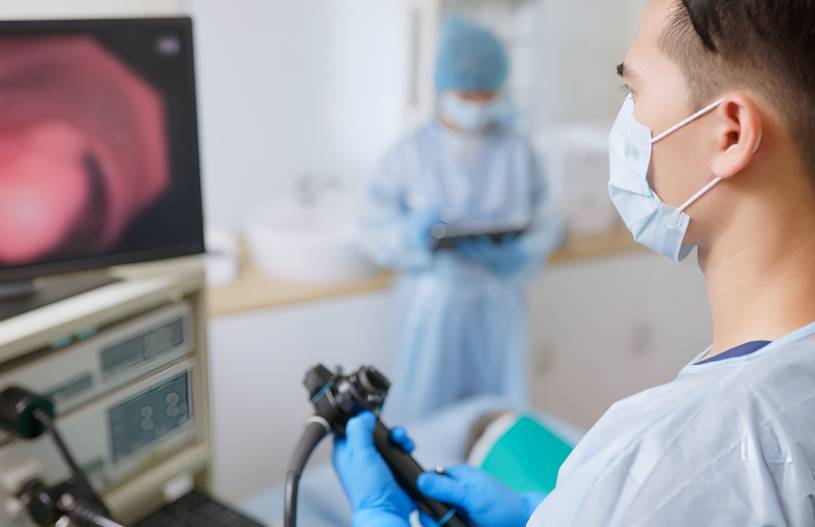
An endoscopic ultrasound uses a thin, flexible tube called an endoscope that has a small ultrasound probe attached. Depending on the area being examined, the endoscope is gently passed through the mouth or, less commonly, through the rectum.
Since the ultrasound probe is located inside the digestive tract, it can produce highly detailed images of the surrounding organs and tissues, including the pancreas, bile ducts, gallbladder, stomach, esophagus, and nearby lymph nodes. This close-up view often provides more information than a traditional ultrasound performed outside the body.
Most EUS procedures are outpatient. Patients receive sedation to help them stay comfortable throughout the procedure, and they are able to return home the same day.
Why Might Your Provider Recommend an EUS?
Your gastroenterologist may recommend an EUS for several reasons. It is commonly used to evaluate abnormalities that have been detected on a CT scan, MRI, or standard endoscopy, providing additional detail that can help clarify a diagnosis.
An EUS may also be recommended to investigate unexplained abdominal pain, examine pancreatic masses, evaluate conditions affecting the bile ducts or gallbladder, or assess enlarged lymph nodes.
Additionally, EUS is an important tool for diagnosing and staging cancers involving the esophagus, stomach, pancreas, rectum, and surrounding structures. When needed, your physician can perform a fine-needle aspiration or biopsy during the procedure to collect tissue samples for further evaluation.
What to Expect During the Procedure
Before your procedure, your care team will provide instructions about fasting and whether any medications should be adjusted.
After arrival, you’ll receive sedation to help you relax and remain comfortable. The procedure typically lasts between 30 and 60 minutes, depending on the reason it is being performed. During the exam, your physician carefully evaluates the area of concern and may obtain tissue samples if necessary.
Afterward, you’ll spend a short time in recovery while the sedation wears off. Due to the sedative medication, you’ll need a responsible adult to drive you home.
Recovery and Results
Most patients recover quickly following an endoscopic ultrasound and are able to resume normal activities the following day. You may experience a mild sore throat or temporary bloating, but these symptoms usually resolve quickly.
If a biopsy or tissue sample is collected, laboratory results may take several days. Once available, your provider will review the findings with you and discuss any recommended next steps or treatment options.
The Benefits of Endoscopic Ultrasound
An endoscopic ultrasound offers several advantages. It provides highly detailed images of the digestive tract and surrounding organs, helping detect abnormalities that may not be visible with other imaging studies.
Because EUS can combine advanced imaging with tissue sampling during the same procedure, it often eliminates the need for additional testing. It is also minimally invasive, requiring no external incisions, while helping physicians make more accurate diagnoses and develop personalized treatment plans.
A Valuable Tool for Personalized Care
An endoscopic ultrasound is one of the most advanced diagnostic tools available in gastroenterology. Its ability to provide detailed images and collect tissue samples allows providers to evaluate digestive conditions with exceptional precision.
If your provider recommends an EUS, don’t hesitate to ask questions about the procedure and how it will help guide your diagnosis or treatment plan. At GI Alliance, our experienced gastroenterologists are committed to providing compassionate care every step of the way.